
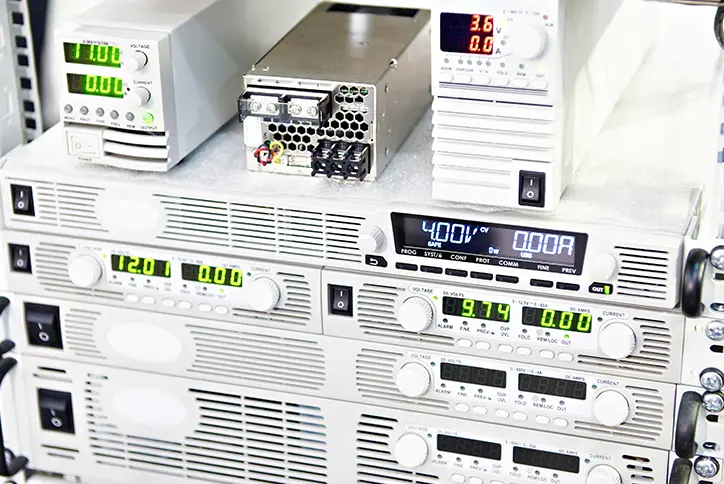
Power control electronics, often called power electronics, convert, control, manage, and protect electrical energy in larger systems, including motor drives, power supplies, battery systems, industrial equipment, and lighting controls. Compared with lower-power boards, these assemblies often involve higher current, higher voltage, heat-generating components, and heavier parts. Building them reliably requires an EMS partner with strong process controls for solder quality, thermal performance, component placement, inspection, testing, and specialized component sourcing.
Why Power Control Boards Are Different from Lower-Power PCBAs
Power control boards differ from lower-power PCBAs because they often carry higher voltages and currents, generate more heat, and include larger or heavier components. These conditions make assembly quality more important because the board is operating under electrical and thermal stress. A weak solder joint can increase resistance and heat. Poor component placement can affect fit, spacing, or connection quality. Contamination on the board surface can become more serious when voltage, humidity, or harsh operating conditions are involved.
Power control electronics may operate in environments with vibration, temperature changes, dust, moisture, or electrical noise. The EMS partner’s role is to build the assembly consistently so it can perform in those conditions.
Why The EMS Partner Matters
The EMS partner plays a critical role in ensuring the assembly can safely handle power, heat, and reliability demands in real applications. Proper manufacturing results in an assembly that can handle repeated operation under load.
A qualified EMS partner for power control electronic assemblies should be able to manage the following in production.
Mixed Technology Assembly
The EMS provider must have capabilities for mixed-technology assembly: through-hole and surface-mount technology. Power control boards often use SMT for smaller control and signal components, then use through-hole parts where strength, current capacity, heat, or mechanical stability require it. Mixed technology gives the board the size and efficiency benefits of SMT while keeping through-hole where it adds real value.
Thermal Management and Solder Quality
One of the largest challenges in power control electronics is the heat they generate. Solder quality is critical because solder joints affect both mechanical strength and electrical performance. Poor solder wetting, insufficient solder, or inconsistent joints can increase resistance and contribute to heat-related reliability problems. Additionally, power control electronic assemblies have larger pads, heavier copper areas, and high-mass components, which may require careful process control because they heat and cool differently than smaller SMT parts.
High-Current and High-Voltage Assembly
Higher-current and higher-voltage boards require careful attention to spacing, component placement, and solder quality. Cleanliness is also important because residue, debris, or moisture can cause problems with assemblies that operate at higher voltages or in harsh environments. The PCB design may define creepage, clearance, copper weight, and other requirements, but the EMS partner must maintain them during assembly.
Component Selection and Supply Chain Support
Power control electronics may require specialized components such as MOSFETs, relays, inductors, transformers, terminal blocks, high-voltage capacitors, heat sinks, or power connectors. An EMS partner should support component sourcing, approved substitutions, and communication when availability affects cost or schedule.
Testing and Inspection Requirements
A qualified EMS partner must ensure testing and inspection processes for power-control electronic assemblies are tailored to the specific risks and end-use requirements. Thorough inspection and testing are essential for reliability, safety, and compliance and may include automated optical inspection, x-ray inspection, in-circuit testing, functional testing, and visual inspection to IPC standards. EMS providers must verify solder quality, component placement, polarity, connector integrity, and other features that affect reliability under load.
Clear Communication
Power control electronic assemblies may involve specialized parts, mixed-technology assembly steps, application-specific testing, or customer-defined requirements. Clear communication helps keep those requirements aligned throughout the build. An EMS partner should notify customers when sourcing issues, substitutions, production questions, or test results could affect the schedule, cost, or performance. This is especially important when the assembly supports equipment where reliability, safety, or uptime matters.
Partner with SMTNW for Power Control Electronics Assembly
Power control electronic assemblies require more than basic PCB assembly. Higher current, heat-generating components, mixed-technology parts, and application-specific testing needs all increase the importance of controlled, repeatable production. SMTNW supports customers with PCB assembly services built around process control, inspection, sourcing support, and communication throughout the build. Contact SMTNW to discuss your power control electronics project and the assembly requirements needed to support reliable performance.