
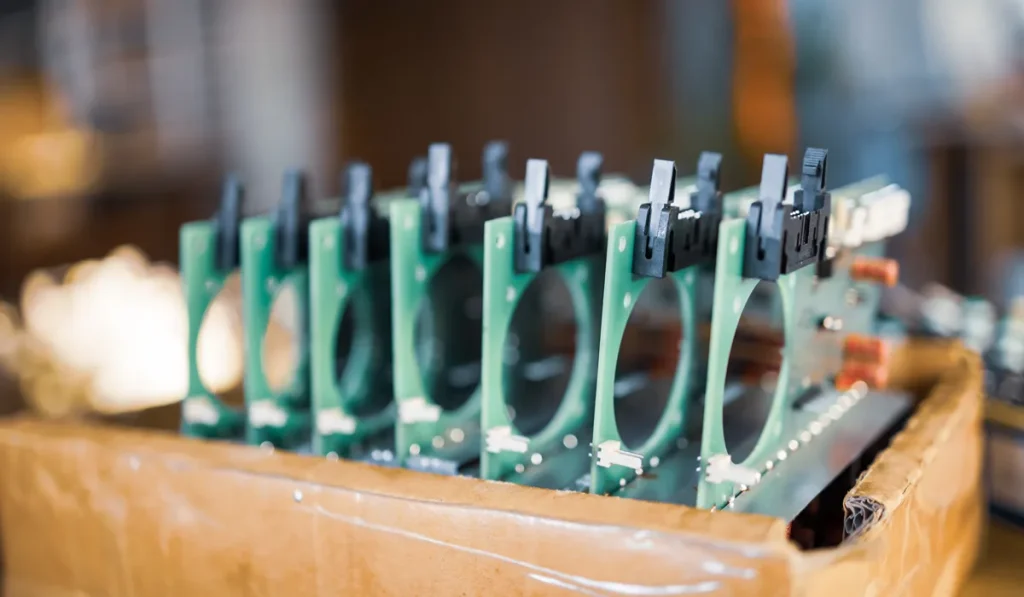
High-mix electronics manufacturing creates different supplier requirements than long, repetitive production runs. OEMs may need multiple assemblies built in smaller quantities, frequent revision control, mixed SMT and through-hole processes, and material planning across many active SKUs. In that environment, the right EMS partner is not just the one with available assembly capacity. The right partner has the systems, communication habits, and process controls needed to keep complex builds moving without adding unnecessary risk.
High-Mix Manufacturing Experience
It’s common across robotics, test and measurement devices, power electronics for equipment, and similar segments to have a range of low to mid-volume products that require highly specialized assemblies rather than millions of identical boards. This has made high-mix low- to mid-volume manufacturing commonplace for electronics products.
Because high-mix manufacturing involves different assemblies, smaller production lots, and requirements that may change, it results in more setup work, a need for tighter documentation control, and greater opportunities for errors if the production system is built around high-volume repetition. In high-volume builds, there is a buffer for error; however, in low-volume builds, that buffer is nonexistent. One defect in a run of 50 boards is much more significant than one defect in a run of 100,000, although zero defects should be the goal.
An EMS partner that regularly supports high-mix work should be able to manage:
- Complex BOMs
- Frequent changeovers
- Kit verification
- Revision updates
- Build documentation
Process Control Across Different Technology Builds
Process control is critical for high-mix electronics because many high-mix assemblies are more than simple SMT boards. They may combine fine-pitch surface mount parts, larger through-hole components, connectors, power components, wiring, mechanical hardware, or hand operations. A qualified EMS partner should have defined processes with controls at each step, rather than relying solely on operator judgment.
For SMT work, that includes controlled solder paste printing, accurate placement, reflow profiling, and inspection. For through-hole and mixed-technology assemblies, it includes soldering controls, mechanical stability, cleanliness, and inspection after key build steps. Repeatability is critical. Each build should follow a documented process that can be reviewed, improved, and repeated from order to order.
Inspection Built Into Production
Inspection should not be limited to a final check before shipment. In high-mix manufacturing, problems need to be found early because each assembly may have different materials, layouts, soldering requirements, and test expectations. If defects are not caught until the end of production, the cost of correction increases, and meeting the delivery schedule becomes harder.
OEMs should ask when inspections occur, who performs them, which standards are used, and how results are documented. Automated optical inspection can verify component placement, orientation, and solder conditions on SMT assemblies. Visual inspection by trained inspectors can support through-hole, mechanical, and final assembly requirements. First-article inspection is also important because it confirms the setup before a full run continues.
Materials Management and Component Control
High-mix programs put additional pressure on purchasing, receiving, storage, and kitting because a single missing part can hold up an order. If the provider uses an unapproved substitution, it can create performance or compliance risk. An obsolete component or a component with a long lead time that wasn’t planned for can affect the schedule before production begins.
A strong EMS partner should verify parts against approved manufacturer part numbers, validate kits before production, note sourcing problems early, and communicate to the customer before making changes that could affect the product. This is especially important for turnkey builds and consignment builds. Even when the OEM supplies the components, the EMS partner still needs a clear receiving and verification process to catch problems before the job reaches production.
Communication That Prevents Avoidable Production Risk
High-mix manufacturing depends on clear communication because the manufacturing details are often specific to the product. The EMS partner may need to clarify a BOM issue, confirm an approved alternate component, address a drawing conflict, clarify a test concern, or adjust the schedule to accommodate material availability.
Good communication does not mean sending more messages. Asking the right questions early, documenting decisions, and keeping the OEM informed when a production, sourcing, or quality issue could affect cost, schedule, or performance will ensure a smoother run. OEMs should look for a partner who is willing to stop and clarify, rather than making assumptions that may create larger problems later.
Questions to Ask Before Choosing an EMS Partner
Before selecting an EMS partner for high-mix electronics manufacturing, OEMs should ask questions that reveal how the supplier actually runs production.
- What production volumes and SKU counts do you typically support?
- How do you verify materials before production begins?
- How do you manage revisions and documentation changes?
- Where does inspection occur during the build process?
- Which workmanship standards guide inspection and acceptance?
- How do you communicate sourcing, quality, or schedule issues?
- What happens when a component is unavailable or obsolete?
- How do you support repeat builds over time?
The answers should be specific. General claims about quality, flexibility, or service are not enough to create trust. OEMs should look for evidence of controlled processes, defined inspection points, documented material handling procedures, and practical communication practices.
Why Choose SMTNW as Your EMS Partner
SMTNW is a great choice for programs that depend on controlled changeovers, early material review, in-process inspection, and direct communication. We use proactive materials management to identify hard-to-find or obsolete components early, validate customer-supplied kits before production, and maintain inventory visibility across turnkey and consignment work to ensure lead times stay on track. Quality control is also built into the way we run production. SMT assemblies undergo 100% 3D AOI inspection, first-article inspections validate new setups, and inspection occurs at multiple points.
We also fit programs where communication and flexibility matter as much as assembly capability. Our team will quickly answer questions, review trade-offs, and escalate decisions that require action. When a customer needs a partial delivery, an expedited schedule, or help resolving a material issue, our team is set up to collaborate to ensure the project is done right.
If you are evaluating EMS partners for a high-mix electronics manufacturing program, contact us to discuss your assembly requirements, production needs, material constraints, and quality expectations.