
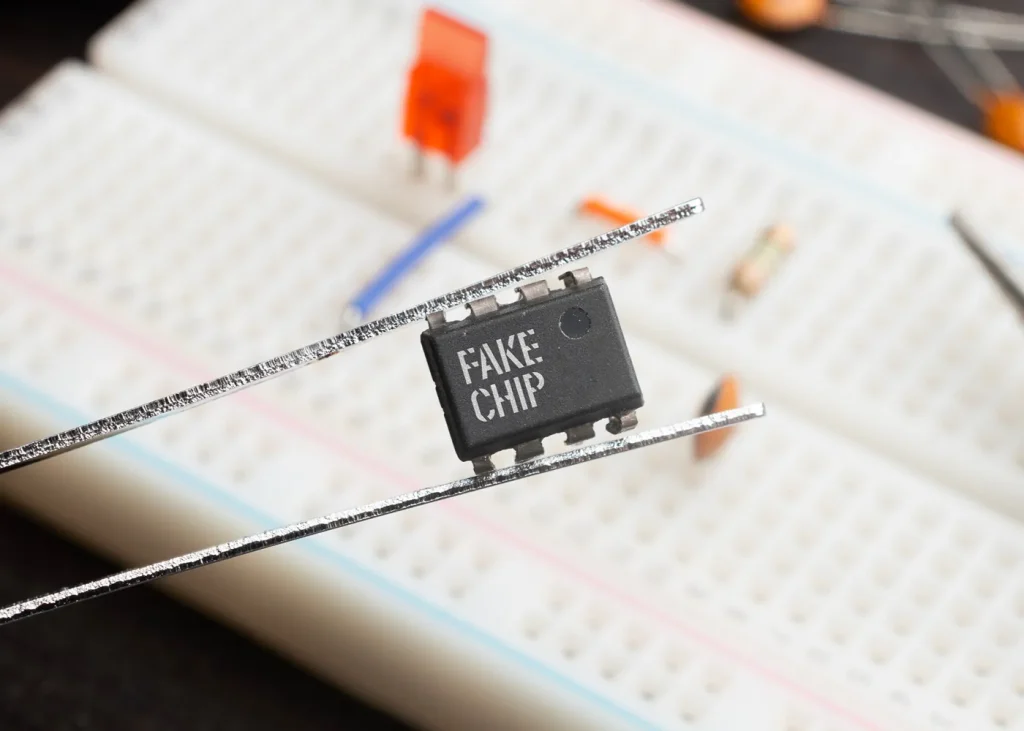
Counterfeit electronic components create a different type of supply-chain problem from an ordinary shortage. A component can appear to match the required manufacturer part number while failing to meet the original manufacturer’s specifications. It may have been remarked, refurbished, salvaged, repackaged, or otherwise misrepresented. The risk becomes more difficult to manage when a product remains in production for many years. Original components may become harder to source, authorized distribution channels may no longer have inventory, and purchasing teams may be pressured to find material quickly. A counterfeit avoidance process must account for these conditions before they become a production issue.
What is the Counterfeit Risk Today?
Counterfeit electronic components remain a real supply-chain risk in 2026, particularly for industrial controls, automation equipment, repair parts, and products that contain older semiconductors. The risk is slightly lower than during the peak semiconductor shortages of 2021-2023, but it has not disappeared.
Counterfeiters are no longer focused only on obsolete parts. ERAI’s 2025 data found that about 1/3 of counterfeit reports were components that are in active production and available through authorized channels. Programmable logic devices, microprocessors, memory ICs, and analog ICs remain among the most frequently counterfeited component categories. Industrial buyers sourcing through brokers, independent distributors, or gray-market channels face increased risk, especially when trying to obtain hard-to-find, end-of-life (EOL), or long-lead-time parts. Purchasing controls, planning, and inspection greatly reduce the risk of acquiring a counterfeit component.
Use Trusted Sources
The strongest control is knowing where components come from. Purchasing directly from the original component manufacturer or an authorized distributor provides a clearer chain of custody than buying through an unknown source. Of course, that does not mean every part available outside authorized channels is counterfeit. It does mean that the buyer has less assurance about the part’s history and provenance. Electronic components can move through multiple tiers of the supply chain, creating additional opportunities for counterfeit material to enter the distribution process.
For long-term production programs, approved supplier lists should therefore be treated as part of the product’s quality controls. A supplier should be evaluated before a component shortage forces an urgent purchasing decision.
Do Not Wait Until A Component Becomes Obsolete
Obsolescence creates one of the most common situations in which a manufacturer may need to look outside the normal supply chain. When an original component is discontinued, remaining inventory may be concentrated among brokers and independent distributors. This can create vulnerability in a long-term production program. A component that has been purchased routinely for years may suddenly require a different sourcing strategy.
The solution is to monitor component lifecycle status before a shortage occurs. If a part is approaching end of life, engineering and procurement can evaluate alternatives, secure inventory, determine whether additional testing will be required for material from an independent source, or redesign the PCBA. Counterfeit prevention and obsolescence management should not be treated as separate purchasing issues.
Verify Supplier And Component Information
Supplier qualification should include more than checking whether a company has the required part in stock. Documentation, traceability, purchasing history, and the supplier’s controls should be considered when evaluating risk. Component information should also be reviewed against the manufacturer’s data. Part numbers, date codes, lot information, packaging, and other markings can provide useful information during incoming inspection.
ERAI identifies discrepancies in packaging, labels, manufacturer markings, lot codes, date codes, and other documentation as potential indicators that a component requires additional scrutiny. These indicators do not automatically establish that a component is counterfeit, but they can justify further investigation.
Inspect Material When The Risk Warrants It
Documentation review is an important control, but it does not replace physical inspection when material has been sourced through a higher-risk channel. Visual inspection can identify differences in markings, package condition, surface condition, packaging, and other characteristics. Depending on the component and application, additional testing may be appropriate.
ERAI’s 2025 annual report illustrates why relying on electrical testing alone can be inadequate. Of the suspect counterfeit parts reported in that year’s data, 24% passed electrical testing. ERAI therefore recommends additional forms of testing and inspection for higher-risk components, particularly when traceability to the original manufacturer is limited. The appropriate inspection level depends on the component, application, source, and risk. A critical processor with uncertain origin deserves a different level of scrutiny from a commodity component purchased through an established authorized channel.
Maintain Traceability Through Production
Traceability should continue after components enter the facility. Records connecting purchased material to suppliers, lot information, and production builds can help identify affected assemblies if a component later becomes suspect. This is particularly important for long-term programs because a questionable component may not be discovered immediately. If the material can be traced to specific builds, the manufacturer can determine which products may be affected instead of treating the entire production history as suspect.
Have A Plan For Non-Authorized Sources
There are production situations where an authorized source cannot supply the required component. This should not result in an informal decision to purchase from whichever supplier has inventory. A documented process should establish when independent distribution is permitted, what supplier information must be collected, what inspection is required, and who has authority to approve the material. Engineering, quality, procurement, and manufacturing should have defined responsibilities before the situation occurs.
Counterfeit Avoidance Is A Production Control
For a long-term electronics program, counterfeit prevention belongs in the normal material management process. Supplier qualification, component lifecycle monitoring, purchasing controls, inspection, and traceability all contribute to the same objective: making sure the component entering production is the component specified by the design.
A PCB assembly provider can support that process by reviewing sourcing risks before material is committed and by applying appropriate controls when standard supply channels are unavailable. The earlier a risk is identified, the more options are available for resolving it. Long-term production requires more than finding components that are available today. It requires a controlled process for verifying that the parts being purchased, received, and assembled remain authentic and traceable throughout the life of the product.
Trust SMT Northwest For Your Long-Term Production Programs
At SMTNW, we reduce counterfeit electronic component risk through controlled sourcing, approved vendor use, incoming component verification, BOM and lifecycle review, kit audits, inventory control, and customer approval before alternate or nonstandard sourcing is used. When components cannot be sourced through normal approved channels, we work with the customer before moving forward so the sourcing decision is visible, documented, and tied to the finished product.
Contact us to get started with your next project.