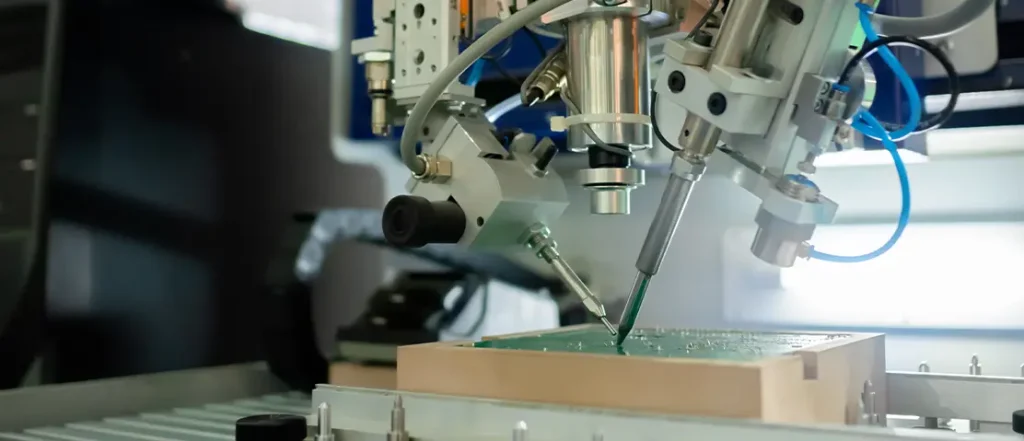
Understanding Through-Hole Assembly
Through-hole assembly mounts electronic components by inserting their leads through drilled holes in the printed circuit board and soldering the leads on the opposite side. This method creates a strong mechanical connection. It is often chosen for parts that must stay secure in demanding environments or may need to be replaced, adjusted, or inspected later in the product’s life.
Unlike surface mount technology, where components sit directly on pads on the board surface, through-hole components are anchored through plated holes in the PCB. This added mechanical strength makes through-hole assembly a good fit for connectors, radial lead components, axial lead components, and larger parts that need more holding strength than surface mounting can provide.
Through-Hole Assembly for High-Mix Production
Selective soldering is a strong fit for high-mix PCB assembly because it handles targeted soldering on boards with varied component layouts. Instead of running the entire assembly through the same solder exposure, the machine applies solder only where through-hole leads require it. That makes the process useful for mixed-technology PCB assemblies with surface-mount components, connectors, or localized soldering needs.
The process also works with both RoHS and leaded soldering requirements, based on the customer’s documentation and product needs. That flexibility is critical for customers that have legacy assemblies, regulated requirements, or different solder specifications across related products. It gives us a controlled way to build through-hole assemblies while matching the solder requirements defined for the project.
Quality Controls for Selective Soldering
Through-hole soldering quality depends on repeatable process control, trained operators, and inspection at the right points in production. We pair selective soldering with J-STD-certified assemblers and rework personnel who understand solder joint requirements, component placement, and workmanship standards. This helps keep through-hole assembly quality tied to documented process steps instead of relying only on final inspection.
Selective soldering also limits heat and solder exposure to the areas that require it, which can help protect nearby components on mixed-technology PCB assemblies. Soldering parameters are set for the board and controlled during the process, helping maintain repeatable results from one assembly to the next. For customers, that means through-hole joints are produced under defined conditions instead of treated as a general manual soldering step.
Learn more about our quality management processes.
Testing and Inspection Support
We integrate through-hole assembly into our broader inspection process so we can check soldering and mechanical assembly steps throughout production. Inspection during the build helps identify workmanship issues earlier, before they move further into assembly. This is especially important for selective soldering work because through-hole joints must meet both electrical and mechanical expectations.
Testing requirements can vary by product, documentation, and customer acceptance criteria. We can align inspection and testing with build needs.
Learn more about our advanced inspection capabilities.
Talk to Us About Selective Soldering for Your Through-Hole PCB Assembly
If your through-hole PCB assembly includes mixed technologies, revision changes, or production requirements that make wave soldering less efficient, we can help you determine whether selective soldering is the right fit. Our team can review your documentation, solder requirements, inspection needs, and production volume to match the process to the build.
Contact us to discuss selective soldering, through-hole assembly, inspection requirements, and next steps for your project.