
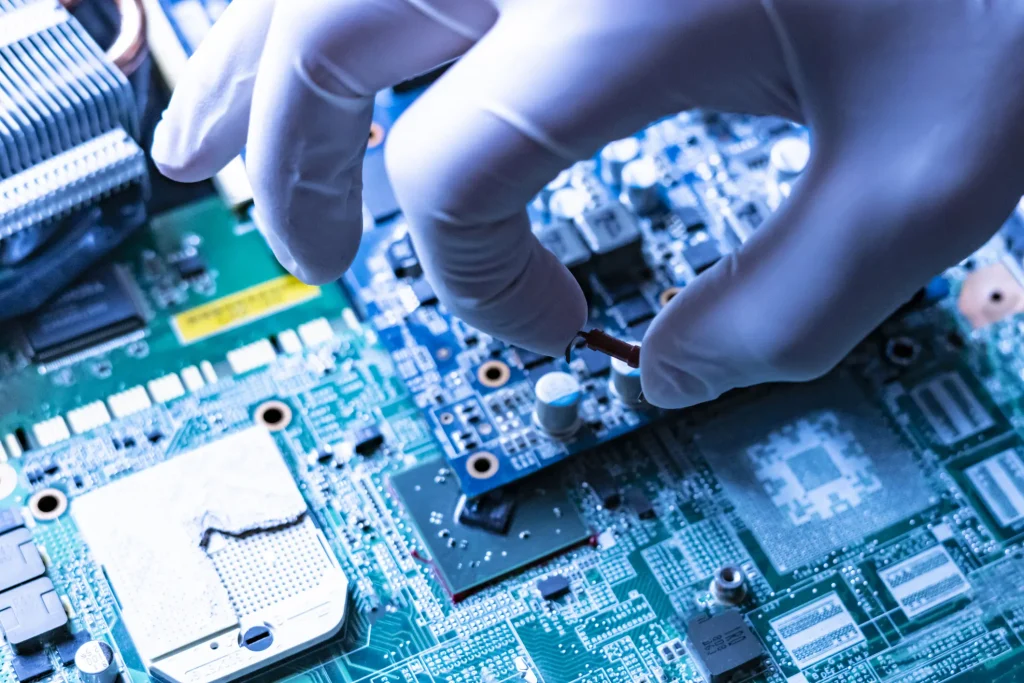
Printed circuit board assembly services can be delicate and intensive, as manufacturers have to be precise with designs while also handling production cycles. This is especially true when it comes to PCBs that include complex electronic builds at low to medium volumes.
SMTNW created a guide on how to handle printed circuit board assembly services featuring complex electronic builds for low to medium volume orders.
Manufacturers and Customers Need to Define Project Scope and Volume
Before any production on the printed circuit boards begins, manufacturers and customers must identify and agree upon what’s considered a low to medium volume order. These definitions can vary, which is why working toward a clear-cut definition is a must.
Generally speaking, however, low volume runs can consist of just a few prototypes to see how the project looks, or tens of units that service a small, niche need for a given customer. Thanks to automation, medium volume can be anywhere from hundreds to thousands of finished boards.
Identifying client needs, such as market demand and time to completion, largely drives the production amount. Of course, there is the cost component, which also plays a big role in deciding upon a set amount.
Printed Circuit Board Assembly Services Require Strong Front-End Work
When the scope of the project and its order volume have been agreed upon, production can begin. Here, design for manufacturing, design for assembly, and design for testing are vital considerations to ensure processes are streamlined and run smoothly.
Design for Manufacturing (DFM)
DFM operations ensure that PCBs can be fabricated with proper yield. This includes considerations for trace and space, drill tolerances, stackup, and thermal reliefs.
Design for Assembly (DFA)
DFA serves as a checkpoint as well as a masterlist that contains the core essentials to the project at large. With DFA, you can better ensure footprints match data, components are placed consistently across the PCB build, spacing and edge clearances meet specified reflow constraints, and heavy parts of the overall build sit on the primary side.
Design for Testing (DFT)
Lastly, when DFT is in place, it opens the door for proper and streamlined testing capabilities when production has completed. DFT accounts for accessible testing points throughout the PCB build, clear reference designators, and certain provisions for ICT (in-circuit testing) or functional testing, so low to medium volume runs can still be properly vetted.
Core Printed Circuit Board Assembly Process Flow
Processes for printed circuit board assembly usually follow these steps.
- Prior to production runs, manufacturers and customers will review the DFM/DFA/DFT agreements and ensure compliance across all three measures. Additionally, manufacturers will confirm component availability before committing to a production run, ensuring that PCBs can actually be created.
- SMT flow follows a pattern of soldering paste print with a stainless stencil. Next, a visual inspection follows AOI procedures.
- There is then an automated process to pick and place the components onto the board, followed by a reflow soldering in a controlled profile intended to minimize defects.
- Next, AOI and X-ray equipment are used to verify the process adheres to the highest standards.
- The use of through-hole and mixed technology assembly is followed by either manual or automated insertion or selective soldering, with a secondary reflow if needed.
Dynamic and Stringent Testing Protocols
For complex electronic builds in printed circuit board assembly services, AOI is used after SMT to verify part presence, polarity, alignment, and solder quality throughout the build.
A final testing typically combines ICT or flying probe tests for structural faults. Additionally, any post-processing work can include PCB cleaning, coatings, a final visual inspection, and proper packaging to prevent mechanical or ESD damage in shipping.
Partner With SMTNW, Experts in Printed Circuit Board Assembly Services
Since 1996. SMTNW has been an industry leader in printed circuit board assembly services. Located in the heart of the Pacific Northwest, we supply critical builds across the region and throughout the entire United States.
We offer both quick quotes and quick turnarounds. While we work quickly, we don’t sacrifice quality, following ISO standards and RoHS compliance for specific projects.
If it’s time to get started on your printed circuit board assembly project, contact the team at SMTNW.