
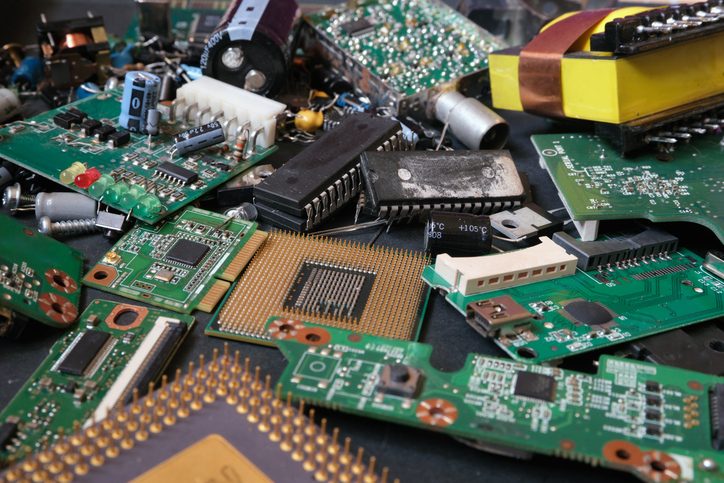
Industrial control systems rarely rely on a single PCB assembly method. Many designs combine compact, high‑density surface mount components with mechanically robust through‑hole parts that must withstand vibration, higher currents, or repeated mating cycles. This is where the integration of SMT and through‑hole processes on the same board, called mixed technology assembly, becomes essential for reliable industrial electronics.
For OEMs building control panels, motion systems, power distribution boards, or automation equipment, understanding how and why these technologies are combined can help avoid manufacturability issues, quality risks, and unnecessary rework.
Why Industrial Control Boards Use Mixed Technology Assembly
Surface-mount technology dominates modern electronics for a good reason. SMT enables dense layouts, automated placement, and efficient production. However, industrial control applications often include components that SMT alone is not well-suited to handle.
Through‑hole components are still commonly used for:
- High‑power connectors and terminal blocks
- Large capacitors and inductors
- Transformers and relays
- Components subject to mechanical stress or repeated connection cycles
In industrial control designs, through-hole components are often used where mechanical robustness is critical, such as connectors, high-power devices, and components exposed to vibration or wiring stress. SMT is frequently used for control logic, signal processing, and communications functions, whereas mechanical and thermal demands in higher-stress circuits are addressed through component selection, layout, and reinforcement rather than package type alone.
Manufacturing Challenges in Mixed Technology Assembly
Combining SMT and through-hole processes introduces manufacturing complexity that must be addressed early. Process sequencing is a primary concern. SMT components are typically placed and reflowed first, followed by through-hole insertion and soldering. Poor sequencing can subject SMT joints to unnecessary thermal cycles or require manual soldering steps, increasing variability.
Soldering method selection is another challenge. Traditional wave soldering can be problematic for mixed assemblies, particularly those with bottom-side SMT or uneven component heights. As a result, many industrial control assemblies rely on selective soldering, which applies solder only where required without disturbing adjacent SMT components.
Design decisions also play a critical role. Component placement, hole sizing, pad design, and keep-out zones directly affect assembly efficiency, soldering access, and inspection reliability.
The Role of Selective Soldering in Industrial Electronics
Selective soldering is a critical enabler for mixed technology assembly in high‑mix, low‑to‑mid‑volume industrial production. Instead of passing the entire board over a solder wave, selective systems target specific through‑hole joints using programmable nozzles.
For industrial control applications, selective soldering offers several advantages:
- Reduces thermal stress on sensitive SMT components
- Eliminates the need for costly custom fixtures
- Supports design changes and revisions without retooling
- Improves consistency compared to manual soldering
This approach is especially well-suited for control boards with varied connector types, uneven component spacing, or frequent engineering changes.
Inspection and Quality Control for Mixed Assemblies
Mixed-technology assemblies require multiple inspection methods to verify solder integrity, component placement, and long-term reliability. No single inspection technique is sufficient because SMT and through-hole joints present different visibility and defect risks.
Automated optical inspection is typically used after SMT reflow to verify component presence, polarity, alignment, and solder fillet formation on accessible joints. However, AOI has limited effectiveness on through-hole solder joints, particularly where leads and fillets are partially obscured by the component body or board thickness.
For through-hole components, visual inspection and X-ray inspection are commonly used to assess solder fill, voiding, and lead wetting within the plated through-hole. This is especially important for high-reliability industrial control assemblies where insufficient barrel fill or incomplete wetting can lead to intermittent failures under thermal cycling or vibration.
Functional testing remains a critical final step. Electrical tests validate that mixed assemblies perform as intended under operating conditions and help detect latent defects that may not be visible through optical methods alone. In industrial environments, functional testing is often combined with burn-in or environmental stress screening for higher-risk assemblies.
Effective quality control for mixed assemblies depends on inspection planning during the design phase. Component placement, solder joint accessibility, and test point availability directly influence inspection coverage, defect detection rates, and rework feasibility. Designs that account for these factors reduce inspection ambiguity and improve overall manufacturing yield.
Design for Manufacturability Matters More with Mixed Technology
Mixed technology designs benefit significantly from early Design for Manufacturability (DFM) review. Seemingly small layout decisions, such as connector orientation or component spacing, can determine whether a board can be selectively soldered, easily inspected, or efficiently reworked.
DFM feedback typically focuses on:
- Component placement relative to soldering access
- Hole‑to‑pad relationships for reliable solder fill
- Clearance for selective solder nozzles
- Managing thermal mass differences across the board
Addressing these factors early reduces production risk and helps maintain consistent quality as volumes scale.
When Mixed Technology Is the Right Fit
Mixed technology assembly is commonly used in applications that combine dense control electronics with mechanically or electrically demanding components, including:
- Industrial automation and motion control systems
- Power management and distribution boards
- PLCs and I/O modules
- Industrial sensors and control interfaces
In these designs, SMT supports compact, high-density control and signal circuitry, while through-hole components provide mechanical retention and robustness for connectors, power devices, and field-wired interfaces exposed to vibration, thermal cycling, or handling.
Mixed technology assembly is not simply a compromise between old and new manufacturing methods. When executed correctly, it is a deliberate strategy that supports performance, durability, and manufacturability in industrial electronics.
By combining controlled SMT processes, selective soldering, rigorous inspection, and upfront DFM collaboration, manufacturers can produce complex industrial control assemblies without sacrificing quality or flexibility.
Partner With SMT Northwest for Your Next Project
Ready to experience the benefits of expertly executed mixed technology assembly? Contact SMT Northwest today to discuss your industrial electronics needs and see how our specialized solutions can elevate your product’s performance and reliability.