
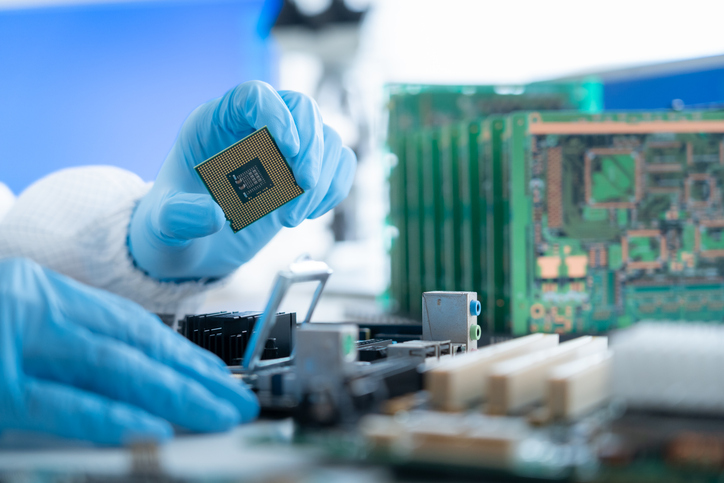
Industrial equipment relies on control, monitoring, and power systems that are expected to operate reliably for years without failure. When you outsource the boards behind those systems, you are not just buying assembly capacity. You are trusting a contract PCBA partner with uptime, safety, and long product lifecycles. This is where industrial electronics manufacturing becomes a specialized discipline rather than a generic PCB service.
This article examines what makes industrial electronics manufacturing different and how buyers and engineers can evaluate contract PCBA partners for control, monitoring, and power applications.
What’s At Stake In Industrial Electronics Manufacturing
In industrial electronics manufacturing applications, control systems, remote I/O, motor drives, power supplies, and condition monitoring devices operate in environments with high voltages, switching loads, electrical noise, vibration, and dust. They often sit in enclosures with limited airflow and run continuously.
Board failure costs are significantly greater than the cost of the board itself, as it can stop a production line, damage upstream or downstream equipment, or pose a safety or environmental risk. Because of this, industrial products are usually designed and maintained within structured safety and reliability frameworks. A PCBA manufacturer that understands the critical nature of these applications will treat process control, test coverage, and traceability as core requirements.
Technical Demands on Industrial PCBA
If you build or source boards for control, monitoring, or power for industrial electronics manufacturing, you likely know the demands are higher than usual. Common challenges include:
Environmental Robustness — Industrial assemblies are subject to wide temperature ranges, humidity swings, vibration, and contamination. Manufacturing decisions around solder alloys, cleaning processes, and coatings influence how long the board survives in that environment. IPC-A-610 provides acceptability criteria for electronic assemblies, covering solder quality, component placement, cleanliness, and marking and labeling at different acceptance classes. For boards in harsh or dusty locations, you may need defined cleanliness levels, selective or full conformal coating, and mechanical reinforcement of heavy components.
Long Lifecycles and Obsolescence Pressure — Industrial products can remain in service for 10–20 years, with support obligations that can extend even longer. Component obsolescence, changing minimum order quantities, and long lead times are routine problems in this space.
Signal Integrity and Power Handling—Boards used in control, monitoring, and power systems often integrate high-current traces and switching devices, precision analog sensing circuits, and industrial communication interfaces such as Ethernet, field buses, and serial links. To ensure reliable performance, assembly processes must preserve proper clearances and creepage distances, prevent solder and flux residues that could compromise insulation resistance, and maintain strict control over reflow and soldering for large packages and power semiconductors.
How the PCBA Partner Supports These Requirements
Once you understand the demands on the assemblies, the next step is to translate them into expectations for the contract manufacturer. Here is what you should be looking for in a partner.
Process Control — IPC-A-610 and related IPC standards (for rework, inspection, and operator training) are widely used benchmarks. Look for defined SMT and through-hole processes, including reflow profiles and soldering methods appropriate for your components; automated inspection (AOI) and, where necessary, X-ray inspection for BGAs and bottom-terminated components; and clear handling and baking procedures for moisture-sensitive devices.
Design for Manufacturability — The initial design of your PCBA is critical. A poorly designed PCBA can drive up costs and impact quality. PCBA design for manufacturability will assure that it can be easily, reliably, and cost-effectively assembled by considering manufacturing processes early on. Key aspects include component placement and orientation, pad design, fiducial marks for accurate machine placement, reflow soldering considerations, and ensuring component footprints match the physical parts and sourcing readily available components.
First-Article Inspection — First-article inspection (FAI) is a critical step performed on every new setup to verify that the initially assembled PCBA meets all design specifications and manufacturing requirements. During FAI, a detailed review of the first board off the production line is conducted, checking component placement, solder quality, and alignment against documentation. This process helps identify any issues early, allowing for corrections before full-scale production begins. By ensuring the assembly process is configured correctly and that the resulting boards meet quality standards, FAI reduces the risk of costly errors and rework, supporting consistent product reliability and manufacturing efficiency.
Functional Testing — Functional testing (FCT) for PCBA verifies that an assembled circuit board works as intended in a simulated real-world environment, acting as the final quality check after assembly. When required, it involves applying power, signals, and inputs to stimulate all functions, and checking for correct responses, such as voltage levels, signal integrity, and software-driven behaviors (e.g., microcontroller commands) to ensure reliability and catch defects missed by earlier tests before shipment.
How To Evaluate A Contract PCBA Partner
For buyers and engineers, vendor qualification is critical to ensure the manufacturer can produce a high-quality PCBA for industrial applications. A simple way to organize the evaluation is to focus on five areas.
- Experience with industrial control, monitoring, and power — Ask for concrete examples of similar projects. You want evidence that they understand the difference between a consumer board and an industrial control assembly.
- Ability to meet your standards and acceptance levels — Confirm which workmanship and safety-related standards they work with day-to-day.
- Strength of test engineering — Ask how they approach test strategy for a new industrial product. The answers tell you whether they can help you prevent field failures rather than just assemble boards.
- Supply chain and lifecycle support — Confirm how they handle component shortages and alternates, last-time-buy decisions, and ongoing monitoring of manufacturer change notifications
- Communication between engineering teams — Good outcomes depend on direct, timely contact between your designers and their process engineers and test engineers.
Ready to Elevate Your PCBA Manufacturing?
Partner with SMT Northwest for reliable, high-quality assembly solutions tailored to your industrial needs. Contact us today to discuss your project and discover how our expertise can help you achieve exceptional results, every time.