
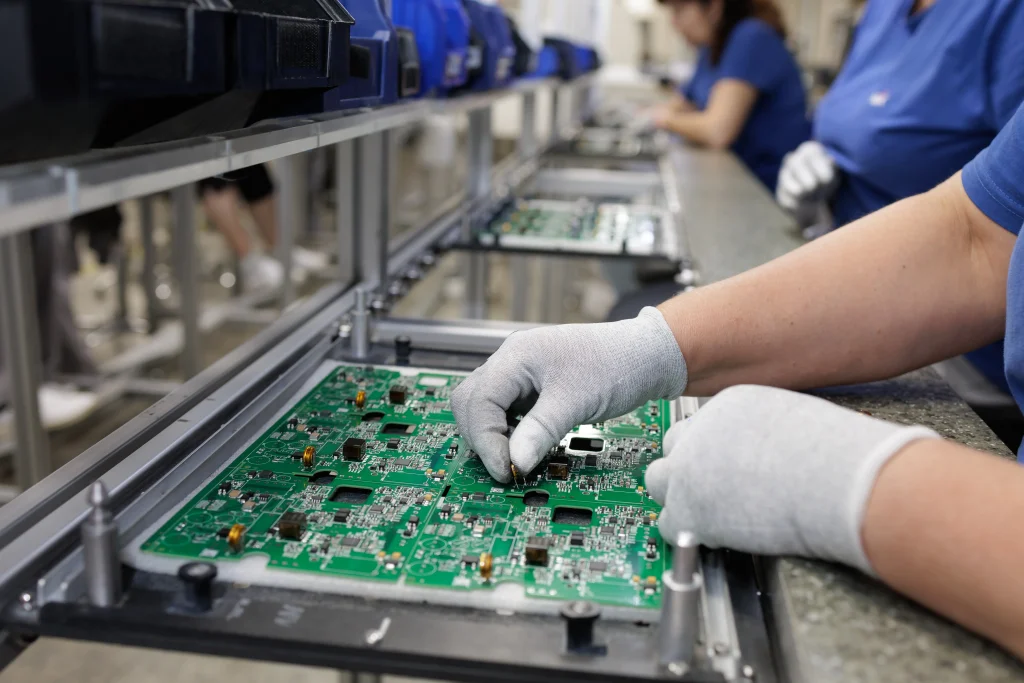
Electronic control board manufacturing is required for products used in power distribution, motion control, sensing, and industrial equipment. Teams responsible for these programs need repeatable builds, controlled processes, and reliable delivery schedules. Variability in materials, assembly, or inspection introduces delays, rework, and field risks, affecting both cost and performance.
Below, we outline best practices for electronic control board manufacturing, the operational benefits they support, and practical ways to simplify assembly. The focus is on actions that reduce errors, improve throughput, and give engineering and procurement teams more control over outcomes.
Best Practices In Electronic Control Board Manufacturing
Electronic control board builds often encounter issues tied to layout constraints, mixed technologies, and incomplete documentation. These problems surface during assembly as placement errors, solder defects, or process instability. Addressing them early through structured design and process reviews reduces downstream disruption.
Design for manufacturability is a required step. Component spacing, pad geometry, and thermal profiles must be reviewed against the intended assembly process. Boards that include BGAs, QFNs, or small packages, such as 0201 and 01005, require tighter control during placement and reflow. Mixed-technology designs that combine surface-mount and through-hole components require defined plans for selective soldering and secondary operations.
Material control is another common failure point in the manufacturing of electronic control boards. Missing components, incorrect revisions, or inconsistent lots can stop production or introduce defects that are difficult to trace. Validating customer-supplied kits before production release prevents shortages and unnecessary purchases. Maintaining visibility into inventory across builds supports continuity and reduces variation between runs.
Assembly processes must be stable and repeatable. Pick-and-place accuracy, feeder setup, and reflow profiles need to be controlled and monitored for each job. Equipment designed for high-mix environments supports quick changeovers without compromising placement accuracy. Programmable reflow ovens and selective solder systems allow consistent processing across different board types and volumes.
Inspection should be integrated throughout the process. Automated optical inspection identifies placement, polarity, and solder defects during production. X-ray inspection supports analysis of hidden joints such as BGAs and verifies rework. Multiple inspection points, including first-article validation, provide quality control at each stage rather than relying solely on final inspection.
Key Benefits Of A Controlled Electronic Control Board Process
A well-defined approach to electronic control board manufacturing produces measurable improvements in cost, schedule, and product performance. These outcomes are tied directly to how materials, processes, and inspections are managed.
Reduced rework and scrap are one of the most immediate benefits. When DFM is addressed earlyand assembly processes are stable, defect rates decrease. This limits rework, which adds cost and can introduce additional reliability risk. Lower scrap rates are especially important in high-mix, low-volume programs, where each unit has a greater impact on overall cost.
Schedule reliability improves when materials are validated and processes are predictable. Production is less likely to stop due to missing components or process-related defects. This allows teams to commit to delivery dates with greater confidence and reduces the need to expedite or make schedule changes.
Product reliability in the field is also affected. Electronic control boards used in power systems, motion control, and industrial sensing must operate continuously or under demanding conditions. Consistent assembly and inspection reduce variability between units, which lowers the risk of failures after deployment.
Internal coordination improves as well. Engineering, procurement, and operations work from consistent documentation and validated materials. This reduces back-and-forth during production and shortens decision cycles when issues arise.
How To Simplify Electronic Control Board Assembly
Simplifying electronic control board assembly focuses on removing avoidable delays and reducing coordination effort while maintaining control over quality. The goal is to keep builds moving without introducing new risks.
Standardized documentation is one of the most effective steps. Clear bills of materials, assembly drawings, and test requirements reduce interpretation errors and rework. Consistent documentation also supports smoother transitions between engineering, procurement, and manufacturing.
Consolidating services reduces fragmentation. When surface-mount, through-hole, testing, and box build are handled within a single environment, there are fewer handoffs and less risk of miscommunication. Integrated services, such as cable and wire assembly or functional testing, enable products to move through production without delays caused by external transfers.
Production should be aligned with actual volume requirements. Many electronic control board programs operate in the high-mix, low-volume range, often in batches of 50 to 200 units. Equipment and processes should support quick changeovers and smaller runs without sacrificing efficiency. Flexible scheduling and the ability to respond to demand changes help prevent bottlenecks and excess inventory.
Direct communication supports faster issue resolution. Access to engineering and operations contacts allows decisions to be made without delay. Regular updates on production status and delivery schedules provide visibility and reduce uncertainty for procurement and operations teams.
Applying These Practices With SMTNW
SMTNW manufactures electronic control boards for applications including power distribution, test and measurement, motion control, industrial sensors, and robotics. The focus is on high-mix, low-volume production, where process control and responsiveness are required to maintain the schedule and quality.
Assembly capabilities include surface-mount and through-hole processing, fine-pitch placement, and support for complex components such as BGAs and QFNs. DFM evaluation is part of the process to identify risks before production begins. Inspection is performed at multiple stages, including automated optical inspection and first article validation, supported by controlled manufacturing environments and trained inspectors.
Operational support includes proactive inventory control, kit validation, and flexible scheduling. Customers have access to multiple points of contact and receive regular communication on delivery schedules. This structure allows issues to be addressed quickly and prevents delays from carrying into later stages of production.
For teams managing electronic control board programs, the objective is consistent output with minimal disruption. SMTNW supports that objective through controlled processes, integrated services, and clear communication. Contact SMTNW to review your current electronic control board assembly process or request a quote for an upcoming build.