
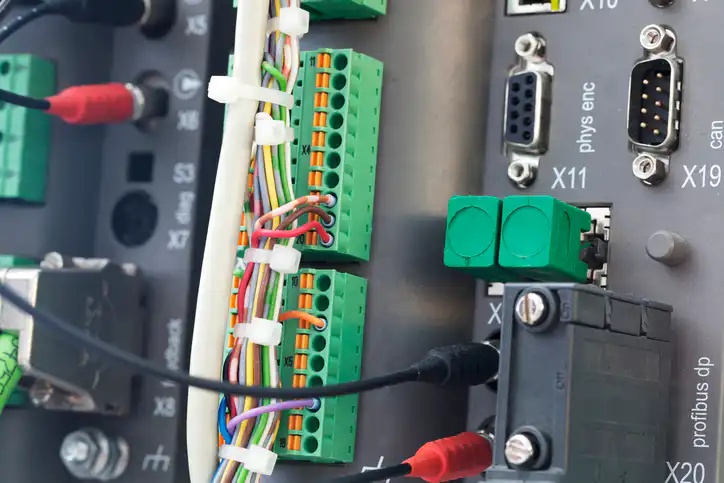
Automation control electronics manage sensing, control logic, communication, and power distribution inside industrial automation systems. These electronics operate in robots, motion systems, monitoring equipment, and process control platforms across manufacturing environments. In practice, automation control electronics are typically built around PCBAs (printed circuit board assemblies) that enable automated systems to interpret signals and execute physical actions. At the center of these systems are populated circuit boards with processors, power components, connectors, and sensors that coordinate mechanical equipment.
Manufacturing these PCBAs requires specialized processes. Precision placement, inspection, and testing all affect how reliably automation systems perform once deployed.
Automation Control Electronics in Industrial Systems
Automation hardware typically integrates several categories of PCBAs (and related electronics).
- Control boards – These boards process signals from sensors and execute control algorithms. They often include microcontrollers, communication interfaces, and signal conditioning circuits.
- Power electronics – Industrial systems frequently require boards designed to regulate and distribute power. These PCBAs manage voltage conversion, current control, and motor or actuator protection.
- Sensor interface electronics – Automation systems rely on continuous feedback from position sensors, temperature probes, optical detectors, and other devices. Interface boards filter and interpret these signals before they reach the control processor.
- Communication modules – Modern automation equipment must exchange data with PLCs, supervisory systems, or remote monitoring platforms. PCBAs supporting Ethernet, fieldbus, and wireless communication enable this connectivity.
These PCBAs often operate in environments where vibration, electrical noise, and temperature variation are common. As a result, reliability at the manufacturing level becomes a critical factor.
Precision PCB Assembly Requirements for Automation Control Electronics
Automation control electronics often include tight tolerances, complex layouts, and power management components that must operate continuously in industrial environments. Small defects at the assembly level can create signal instability, intermittent failures, or shortened product life.
Precision PCB assembly addresses these risks through tightly controlled manufacturing processes.
- High-accuracy component placement ensures that integrated circuits, passive components, and connectors align correctly with solder pads. Surface-mount placement equipment must maintain tight positional tolerances to prevent misalignment or weak solder joints.
- Controlled soldering processes maintain consistent electrical connections between components and the circuit board. Reflow profiles must match the thermal characteristics of the board and components so that solder joints form correctly without overheating sensitive devices.
- Inspection systems verify assembly quality before boards move into final products. Automated optical inspection identifies missing components, placement errors, or solder defects, while X-ray inspection can reveal hidden problems beneath packaged components.
- Process consistency across these steps improves production yield and reduces the likelihood of failures once automation equipment is installed in the field.
Manufacturing Challenges in Automation Electronics
PCBAs used in automation equipment often combine several design characteristics that complicate manufacturing. Many boards contain high component density because control electronics must process signals, manage communications, and regulate power within a limited footprint. Tight spacing increases the importance of accurate component placement and reliable solder joints.
Automation control electronics also frequently combine analog and digital circuits. Signal conditioning circuits that handle sensor data must operate alongside processors and communication interfaces. Careful assembly is required to preserve signal integrity and prevent electrical interference.
Power handling is another factor. Control electronics often share space with power regulation components that generate heat or carry higher current loads. Manufacturing processes must ensure reliable solder connections and stable mechanical attachment for these components.
Because these boards operate in industrial environments, connectors and other mechanical components must also be assembled securely so they withstand vibration and repeated use.
Precision assembly processes allow manufacturers to manage these challenges while maintaining consistent production quality.
How Electronics Manufacturing Supports Automation Control Systems
Electronics manufacturing plays a direct role in the performance of automation control electronics. Modern production lines rely on automated equipment to maintain consistent assembly accuracy across large production volumes.
Surface-mount placement systems install components at high speed while maintaining tight placement tolerances. Reflow soldering systems apply controlled heating profiles that form consistent solder joints across the entire board.
Inspection and verification technologies add another layer of quality control. Automated optical inspection systems compare assembled boards against reference models to identify defects before they reach final assembly. X-ray inspection can confirm the integrity of solder joints that cannot be viewed directly.
These manufacturing processes allow complex PCBAs to be produced with consistent quality while supporting the reliability requirements of industrial automation equipment.
Electronics Manufacturing Considerations for Automation Hardware
Designing automation control electronics requires attention not only to system architecture but also to manufacturability. Design decisions influence how easily PCBAs can be produced and how consistently they perform during production.
Component spacing, thermal management, and connector placement all affect assembly quality. Boards that provide adequate access for inspection and testing allow manufacturers to identify defects earlier in the production process.
Collaboration between engineering teams and an EMS/PCBA manufacturing partner can help identify potential production challenges before manufacturing begins. Design reviews focused on manufacturability often reduce assembly defects and improve production yield.
For companies developing automation equipment, reliable PCB assembly becomes a critical step in translating electronic designs into durable hardware capable of supporting long operating cycles.
Automation control electronics ultimately depend on precise manufacturing. The quality of the PCB assembly process influences signal stability, electrical reliability, and the long-term performance of the automated systems these electronics control.
What to Look for in an EMS Partner for Automation Control Electronics
When you’re comparing EMS providers, focus on the capabilities that reduce risk for automation control electronics, especially around test coverage, change control, and supply chain stability.
- DFM/DFT review to catch layout, footprint, and test-access issues before NPI.
- Documented test strategy (functional test, fixtures, reporting) aligned to your reliability requirements.
- Process control and traceability (revision control, lot tracking, clear change-management for ECOs and approved substitutes).
- Supply-chain approach for long lead-time parts, alternates, and lifecycle risk.
- Clear communication on build status, constraints, and quality trends—especially during ramps.
If you’re evaluating an EMS partner for automation control electronics, SMTNW can support your program from early builds through ongoing production. Contact us and share your BOM and assembly requirements to start a practical manufacturability and test-readiness review.